
Undertaking the sacred journey of Umrah is a deeply enriching experience that leaves a lasting impact on the hearts and souls of believers. This holy journey to the blessed cities of Makkah and Madinah is a unique opportunity for believers to draw closer to Allah, seek forgiveness, and renew their faith.
It is an opportunity for self-reflection, repentance, and seeking Allah’s blessings. This guide by FlyRihlah Aviation will provide you with essential Umrah guidelines to ensure a smooth, authentic, and spiritually fulfilling experience.

Umrah is an act of worship performed by millions of Muslims every year. Following in the footsteps of Prophet Muhammad (PBUH), believers experience deep spiritual connections, seek Allah’s blessings, and find opportunities for self-reflection and repentance.
By choosing FlyRihlah Aviation for your Hajj and Umrah training, you benefit from authentic Sunnah-based guidance, practical demonstrations, spiritual orientation, and a commitment to your safety and well-being InsaAllah.
The very first step is making the Niyyah (intention) for Umrah. Niyyah is an action of the heart; it should not be pronounced verbally. One must purify the intention solely for the sake of Allah.
Evidence:
عَنْ عُمَرَ بْنِ الْخَطَّابِ رضي الله عنه قَالَ: سَمِعْتُ رَسُولَ اللَّهِ ﷺ يَقُولُ:
«إِنَّمَا الْأَعْمَالُ بِالنِّيَّاتِ، وَإِنَّمَا لِكُلِّ امْرِئٍ مَا نَوَى»
(Al-Bukhari 1, Muslim 1907)
👉 The intention is: “I am performing ‘Umrah solely for the sake of Allah.”
Before beginning Umrah, pilgrims must enter the state of Ihram, a sacred condition of purity and devotion.
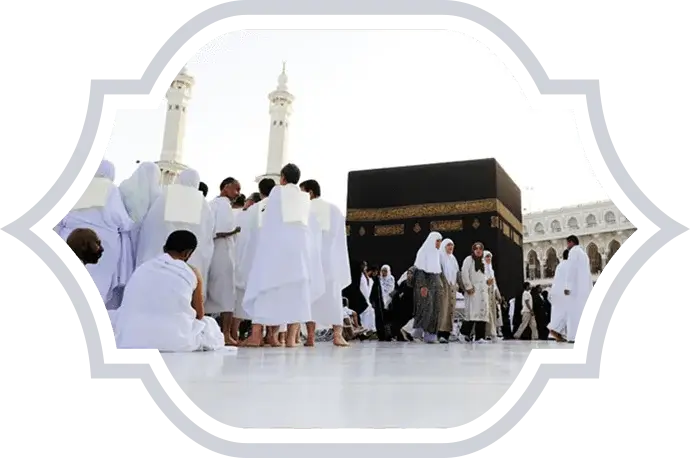
Men wear two unstitched white garments.
Women wear their regular modest clothing without adornment.
Prohibited acts during Ihram: cutting hair or nails, applying perfume, marital relations, arguments, or harmful behavior.
Evidence:
النَّبِيُّ ﷺ قَالَ:
«مَنْ أَحْرَمَ بِالْحَجِّ أَوِ الْعُمْرَةِ فَلَا يَحْلِقْ شَعْرًا وَلَا يَقْصُرْ وَلَا يَخْطُبْ نِسَاءً وَلَا يَتَزَوَّجْ وَلَا يَتَطَيَّبْ»
(Al-Bukhari 1838, Muslim 1206)
After assuming Ihram, the pilgrim begins reciting the Talbiyah, expressing servitude and submission to Allah’s call.
Talbiyah:
لَبَّيْكَ اللّهُمَّ لَبَّيْكَ، لَبَّيْكَ لَا شَرِيْكَ لَكَ لَبَّيْكَ، إِنَّ الْحَمْدَ وَالنِّعْمَةَ لَكَ وَالْمُلْكَ، لَا شَرِيْكَ لَكَ
Pronunciation: Labbayk allahumma labbayeek, labbayeeka l’aa sharika laka labbayeek, innal-ḥamda wan-ni’mata, laka wal-mulk, l’aa sharika lak.
Evidence:
عَنِ ابْنِ عُمَرَ رضي الله عنه قَالَ: كَانَ رَسُولُ اللَّهِ ﷺ يُهِلُّ مُلَبِّدًا يَقُولُ:
«لَبَّيْكَ اللّهُمَّ لَبَّيْكَ»
(Al-Bukhari 1549, Muslim 1184)
Beyond physical arrangements, pilgrims must prepare spiritually: sincere repentance, Qur’an recitation, frequent du‘a, and increasing good deeds before departure.
Evidence:
قَالَ اللَّهُ تَعَالَى:
وَتُوبُوا إِلَى اللَّهِ جَمِيعًا أَيُّهَا الْمُؤْمِنُونَ لَعَلَّكُمْ تُفْلِحُونَ
(Surah An-Nur: 31)
I will expand each step like a detailed tutorial—clear, step-by-step, with evidence from Qur’an and authentic Sunnah, exactly in the Salafi approach (no innovations, only what the Prophet ﷺ and the Sahabah practiced).
Enter the Masjid with your right foot.
Say the du‘a for entering the masjid:
اللَّهُمَّ افْتَحْ لِي أَبْوَابَ رَحْمَتِكَ
(O Allah, open for me the doors of Your mercy.)
When you first see the Ka‘bah, raise your hands and make du‘a sincerely from your heart.
There is no fixed du‘a at this moment in authentic Sunnah, but the early Muslims used to weep and ask Allah for forgiveness and acceptance.
Begin Tawaf at the Black Stone corner.
Face the Black Stone, raise your right hand, and say:
بِسْمِ اللهِ، وَاللهُ أَكْبَر
(In the name of Allah, Allah is the Greatest.)
If possible, kiss the Black Stone. If not, touch it with your hand and kiss your hand. If that is also not possible, point towards it with your hand and say “Allahu Akbar.”
Evidence:
جَابِر رضي الله عنه said: “I saw the Messenger of Allah ﷺ jogging (رمل) for three rounds and walking for four.”
(Muslim 1218)
Move around the Ka‘bah counter-clockwise.
Each complete round counts as 1 circuit. Perform 7 circuits in total.
Between the Yemeni Corner (الركن اليماني) and the Black Stone, recite the Qur’anic du‘a:
رَبَّنَا آتِنَا فِي الدُّنْيَا حَسَنَةً وَفِي الآخِرَةِ حَسَنَةً وَقِنَا عَذَابَ النَّارِ
(Our Lord, grant us good in this world and good in the Hereafter, and protect us from the punishment of the Fire.) [Surah Al-Baqarah: 201]
👉 For the rest of Tawaf, there are no prescribed du‘as from the Prophet ﷺ. Supplicate in your own language—ask Allah for forgiveness, Jannah, protection from Hellfire, and blessings in dunya and akhirah

After finishing 7 circuits, pray two rak‘ahs behind Maqam Ibrahim if possible.
Recite Surah al-Kafirun in the first rak‘ah and Surah al-Ikhlas in the second (recommended).
Then drink Zamzam water, facing the Ka‘bah, and make du‘a.
After completing Tawaf, go to Safa.
Face the Ka‘bah, raise your hands, and say:
إِنَّ الصَّفَا وَالمَرْوَةَ مِن شَعَائِرِ اللَّهِ
(Indeed, Safa and Marwah are among the symbols of Allah.) [Surah Al-Baqarah: 158]
Then say:
أَبْدَأُ بِمَا بَدَأَ اللهُ بِهِ
(We begin with what Allah began with.) [Muslim 1218]
Praise Allah, declare His Oneness (Tahleel), glorify Him, and make du‘a three times.
Walk normally between Safa and Marwah.
Between the two green markers, men should jog lightly (women walk normally).
Upon reaching Marwah, face the Ka‘bah, repeat the same dhikr and du‘a as you did on Safa.
Continue this process back and forth.
One trip Safa → Marwah = 1 round.
Another trip Marwah → Safa = 2 rounds.
Complete 7 rounds, ending at Marwah.
Reminder: Supplicate during Sa‘i with any du‘a from your heart. There are no specific Sunnah du‘as for each step.
After completing Sa‘i, men should shave their heads (Halq) or trim their hair (Taqsir).
Shaving is more virtuous and carries greater reward.
Evidence:
The Prophet ﷺ said:
«اللَّهُمَّ ارْحَمِ الْمُحَلِّقِينَ»
They said: “And those who trim, O Messenger of Allah?”
He ﷺ repeated: «اللَّهُمَّ ارْحَمِ الْمُحَلِّقِينَ» three times, then said: «وَالْمُقَصِّرِينَ» (and those who trim).
(Al-Bukhari 1727, Muslim 1301)
Women do not shave. They only cut a small portion (around a fingertip’s length) from the end of their hair.
Throughout the Umrah, from Tawaf to Sa‘i and Halq/Taqsir, the pilgrim should constantly remember Allah and make du‘a.
There are no fixed du‘as for Tawaf or Sa‘i in the Sunnah.
Instead, the believer should:
Glorify Allah (سبحان الله).
Praise Him (الحمد لله).
Declare His Oneness (لا إله إلا الله).
Seek forgiveness (أستغفر الله).
Make personal du‘as in any language.
👉 This is the time to ask Allah for forgiveness, mercy, Jannah, safety from Hellfire, blessings for one’s family, and the well-being of the entire Ummah.
✨ Summary:
Tawaf = 7 circuits around the Ka‘bah, starting from the Black Stone.
Sa‘i = 7 walks between Safa and Marwah.
Halq/Taqsir = Shaving or trimming the hair (shaving preferred for men, trimming for women).
Du‘a = From the heart, no fixed words required.
Undertaking the sacred journey of Umrah is a deeply enriching experience that leaves a lasting impact on the hearts and souls of believers. It is a unique opportunity to seek closeness to Allah, purify the soul, and strengthen one’s faith. By following these essential Umrah guidelines, you can embark on a journey of a lifetime, leaving behind a transformed and spiritually fulfilled self.
The Ihram attire, consisting of two white, seamless clothes for men, and modest clothing for women, symbolizes purity, humility, and equality before Allah. It is a state of ritual consecration, and specific rules and restrictions apply while in Ihram.
Yes, it is possible to combine Umrah with visits to other cities and historical sites in Saudi Arabia. However, ensure that you fulfill the essential rituals of Umrah first and allocate sufficient time for the pilgrimage.
There are no specific age restrictions for Umrah, and people of all ages can undertake the pilgrimage. However, elderly or physically challenged individuals may need assistance during certain rituals.
The duration of an Umrah trip can vary, but a standard itinerary may last around 7 to 10 days. This period allows sufficient time for performing the rituals, visiting holy sites, and experiencing the spiritual essence of the journey.
If a ritual is missed during Umrah due to unforeseen circumstances, there is no need to panic. Repent sincerely, seek forgiveness, and perform the missed ritual as soon as possible once the situation is resolved.